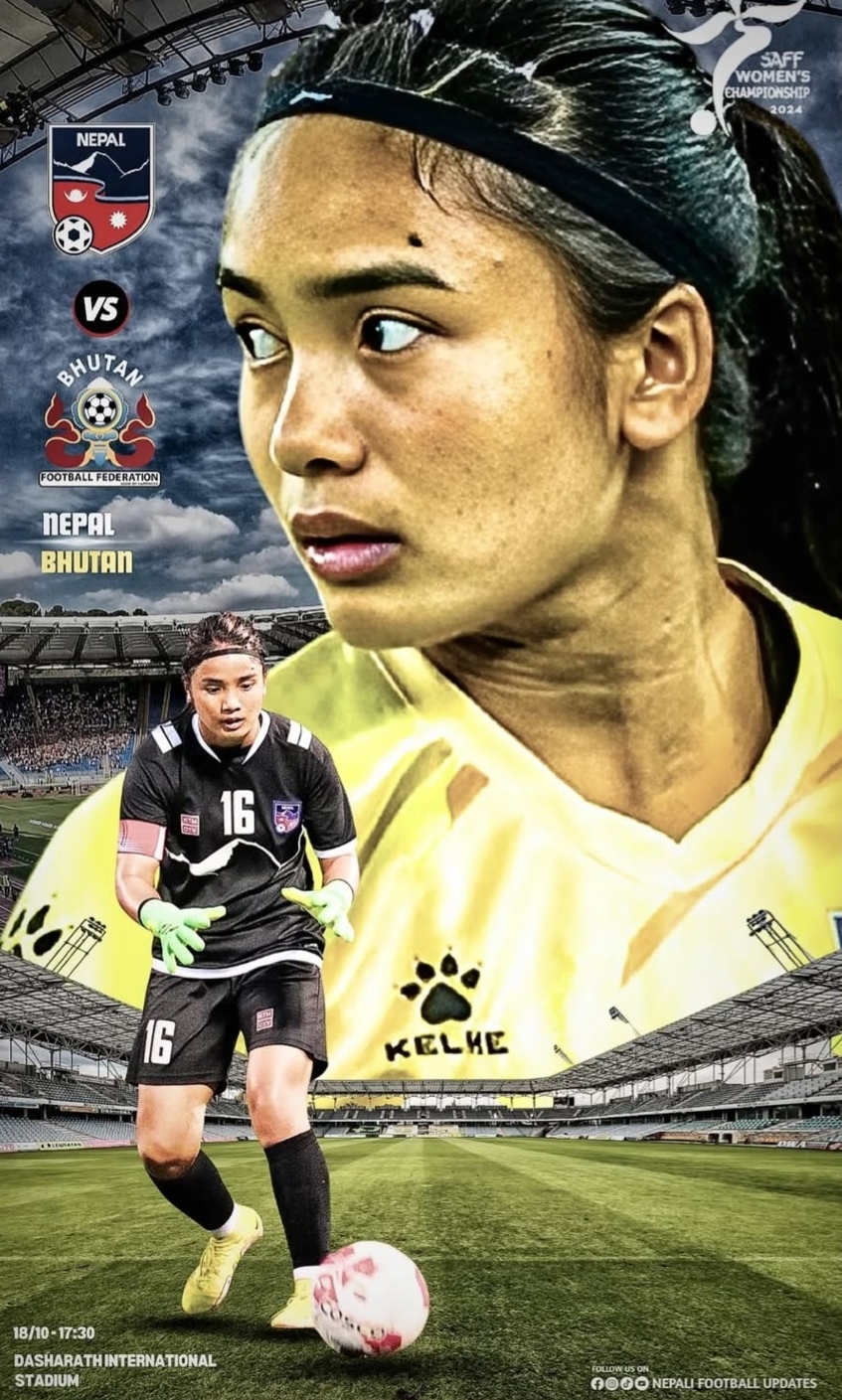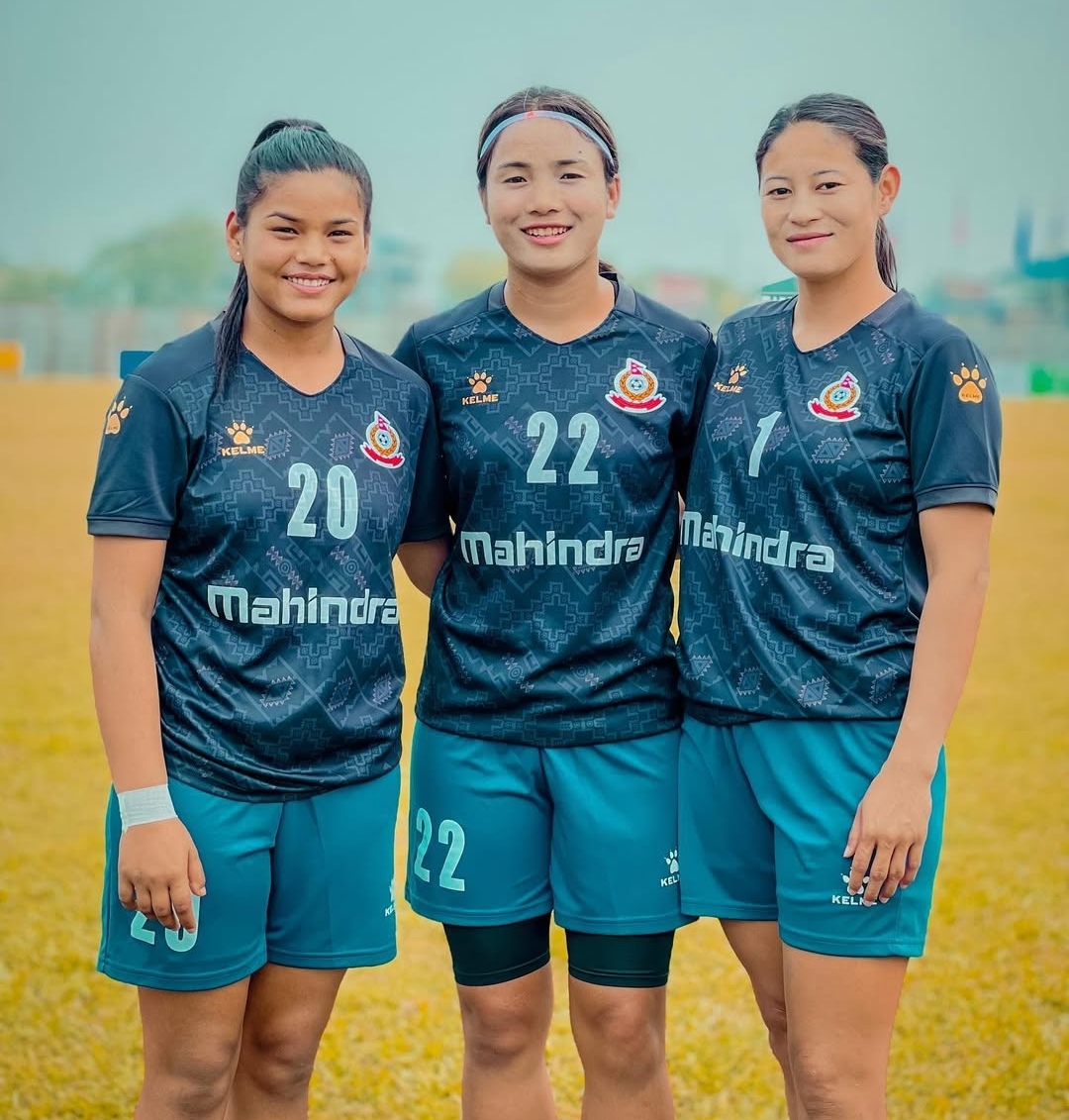
From being stuck at home to becoming the captain of the Nepal national team, what was the turning point that shaped you?
I never thought that one day I would be the captain of Nepal. When I was watching boys play football, I wanted to play like them. But my parents wouldn't let me go out and play, so I would sneak out of the house and play. After coming from school, I would finish all the housework and sometimes there would be days when I would sleep hungry just so I could play football. One day, I went with my sister to a local match for a team called Pandam. At that time I was playing as a midfielder or a striker, but they didn't have a goalkeeper so they put me in goal. I played reluctantly because I was the youngest in the team. I didn't like playing as a goalkeeper because I was afraid of getting injured. The ball would come powerfully from close range and hit my face and body, which scared me. However, I played as the goalkeeper of the Pandam team and this was the turning point in my goalkeeping journey.
As a goalkeeper, what emotion do you struggle with the most on the field — fear, excitement, or responsibility?
As a goalkeeper on the field, I struggle with responsibility rather than excitement because the goalkeeping position is difficult. One must be mentally strong, a goalkeeper's hands hold 40/50 percent of the victory of the game.
When you first started playing football, how was women's football perceived in Nepal? How do you see it today?
When I first started playing football, I didn't know there was a national team. The more I kept playing, the more I learned. At the time, women's football was not viewed very positively and the facilities were not good. There were no domestic leagues or international matches — they were completely ignored.
It has been 10 years since I started playing football and in just one year, the perspective on women's football has changed a lot. Women's football, which was not talked about much in the past, is now highly discussed in Nepal. As a captain, it makes me happy to see that the team is balanced. It took 10 years to build a good team and now, in terms of facilities, men and women are treated equally in Nepal.
However, the leagues are still not organized properly. Maybe leagues will slowly start to be organised.
Was it your own choice to be a goalkeeper or was it a necessity?
I accepted being a goalkeeper as a necessity, it was not my choice. But now I realize that everything happened for a good reason. I feel like God has chosen me to be a goalkeeper. Maybe if I hadn't played goalkeeper, I wouldn't have been the captain of Nepal and I wouldn't have had the opportunity to play in Europe.
When I started playing professional football in the South Asian region, in Pakistan and India, I learned that players go to different clubs through agents. At that time, I started applying to agencies, but no one answered my messages. Still, I didn't give up and tried constantly for four years.
Finally, I found Srdan Berovic and thanks to him I got my opportunity. My dream has come true, but this is not the end. I still want to join bigger clubs and learn European football better.
How have you developed both as a player and as a person after moving to Greece?
At first, I was very happy to come to Greece and play in Europe. But when I arrived, I couldn't play right away because my documents were not completed.
After meeting the team and starting training, it took me a while to get used to it. I was really excited on the first day and had difficulty with the language. The first two words I learned were "forward" and "backward".
My first match was very important. The opposing team was very strong, I was wondering how the match would go. But I did my best to help my team and my teammates were happy with my performance. They congratulated me and said I played well.
I noticed some differences between Nepal and European leagues. Here players develop from the infrastructure, whereas in Nepal we start learning football at around 13 years old. Greek players had better footwork, vision and shooting power. But after coming here, I strongly believe that at least three or four Nepali players can play in Europe.
Samba, one of our best strikers, is currently playing in the Champions League in France. This proves that Nepali players can compete in Europe. I hope more of our players will get this opportunity in the future.
As an international player, how do you carry your Nepali identity on the field?
As an international player, I carry my Nepali identity on the field and represent my roots with passion and discipline. In victory or defeat, I carry myself with dignity. By wearing a jersey bearing the Nepal flag, I dedicate my performance to my hometown.
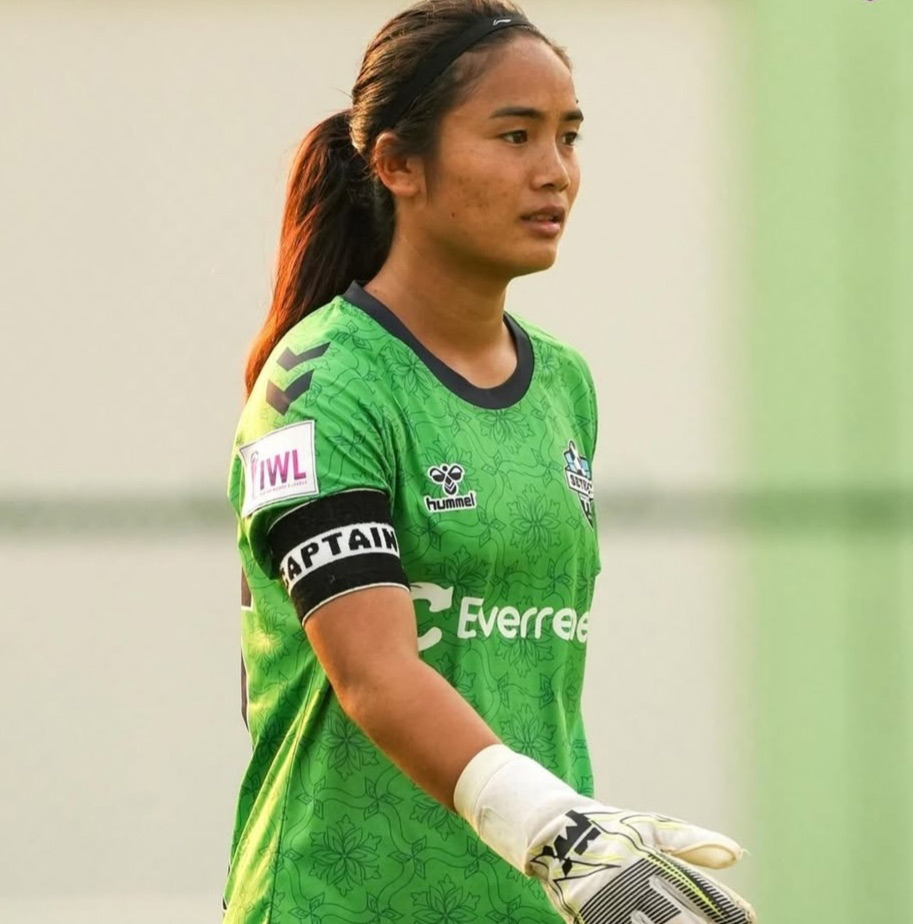
In the movie, your father is against your football career. How is your relationship with your father today?
A movie is being made about my real life story and I am acting in that movie. I feel extremely happy and lucky. When I was about 5 or 6 years old, my parents separated due to some problems. Afterwards, my mother, my brother and I moved to another place. My mother fought hard for us. A few years later, due to social pressure, she married again. My stepfather's house was near a school and a football field, but I wasn't allowed to play football at that time. At that time, society believed that girls should not play football and should not wear shorts. People were talking negatively about me because I played football with boys, and that's why my stepfather was against football. But now, he fully supports me.
Your mother's belief in you has been like a lifeline in your life. At what difficult moment was your support most meaningful?
When my mother got married for the second time, she didn't leave us behind. No matter how difficult the situation was, he took us with him. He was the one who truly built my life. When my mother remarried, she took me and my brother with her. He didn't leave us behind or abandon us — that was the most important thing in my life. No matter how hard we went through, he never left our side. Even though my family did not support me playing football, my mother supported me a lot.
What is the real meaning of being a female football player in Nepal? How does society perceive you?
Being a female footballer is about more than just playing the sport — it's about breaking barriers, breaking stereotypes and proving that women have as much right to a place in the game as men. It also carries a responsibility; It means inspiring the next generation, fighting for equality and overcoming the challenges of being a female athlete. It's about resilience, passion, and chasing dreams by overcoming obstacles.
Do you believe that female players should compete not only on the field, but also at home and in society?
Challenges exist not only on the field, but also in society, and we need to combat them too. Being here today was my dream to become a national player. I came to this point by struggling with my family and society. If I had left football out of fear for my family and society, today Anjila Tumbapo Subba would just be someone's mother and a housewife. But I didn't see society or my family's expectations as an obstacle. I moved forward and today I am proud of myself.
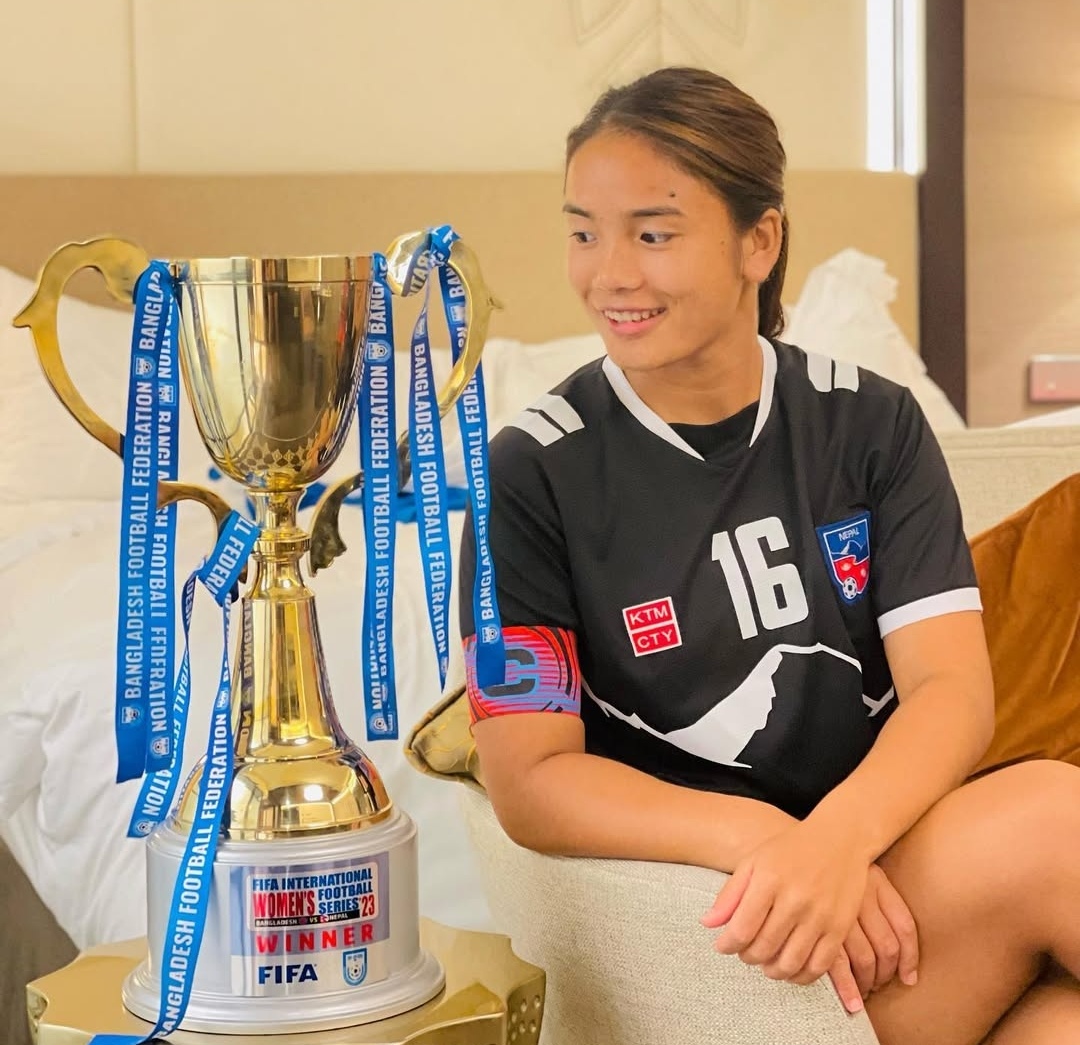
How does it feel to portray your own life story? Which feeling was the most difficult?
Watching my own movie on screen was a moment of incredible happiness. My big thanks to producer Prem Kumar Shrestha and director Milan Chams for making this movie happen. Thanks to their support, I believe my life story has increased the self-confidence of many women. The most difficult experience for me was playing the scenes where I left my mother in a new city at the age of 14 and my father abandoned us. Those moments were very emotional for me.
As a football player, you are used to stadiums — how did standing in front of the camera change you?
I make my game speak for itself on the field, but I have learned to express my emotions in front of the camera. This improved my communication skills and I began to see myself as not just a performer, but also an inspiration. The struggle and success of my journey can serve as an example for others.
What is the one message you hope young girls and their families take away from this movie?
I feel like this movie will inspire many young people. No matter how difficult the situation is, you should never give up on your goals. He teaches the importance of believing in himself.
If someone else were to portray you, what personal characteristic would you want them to capture?
If someone were to portray my character, I would want them to capture my tenacity, warrior spirit, and never-give-up mentality. I faced many challenges in my travels but I never gave up. These characteristics define who I am, and that's what I want to be authentically represented on screen.
Is there anything you would like to say to young girls who are afraid of dreaming or who face opposition from their families?
Never give up on your dreams, difficulties will come, but if you move forward with confidence, you will definitely achieve success one day.
Did having your football journey turned into a movie give you a new sense of responsibility?
Yes, turning my football journey into a movie gave me a new sense of responsibility. Now, I believe I have a greater mission to inspire and support young athletes, especially those who dream of achieving something big. My story is no longer just mine — it represents the struggles and triumphs of many. This encourages me to work harder, stay true to my values, and be a role model both on and off the field.
Your story is inspiring not only in Nepal but also globally. How do you see yourself as a global role model?
I see myself as a global role model who works with perseverance and determination to overcome challenges, proving that everyone can be successful, regardless of where they come from.
What word best describes Anjila — courage, determination or imagination?
Stability. Because my journey has been about overcoming obstacles and never giving up.
Is the strongest emotion you feel on the field the same as the one you feel in front of the camera?
No, the feelings are different. On the field, my emotions are driven by instinct and competition. In front of the camera, it's about reflection, storytelling and expressing emotions in a new way.
After this movie, do you have any plans to share or support other stories with important social messages?
Yes, I believe in the power of stories. If my journey can inspire others, I would love to support and share more stories that highlight challenges, dreams, and achievements.
What's your next big dream? Do you have any other dreams beyond football?
My dream is to establish an academy that will help develop Nepalese football and inspire young players. Beyond football, I want to contribute to sports development and encourage others to chase their dreams.
From Nepal to Greece – what the world looks like through the eyes of a goalkeeper
As a goalkeeper, I see the world as a place where every second counts, where decisions shape the outcome and staying strong in tough moments defines who you are.
Is there a motto or saying that you often remind yourself of?
Never stop believing in yourself. This helped me overcome challenges and kept me moving forward.
If you had a time machine, which version of Anjila would you go to and what would you say to it?
I would go to my younger self and tell her, "No matter how hard it is, keep going. One day you will inspire many people." I would say.
When you retired from football, what would be the word associated with your name?
Inspiration. I want to be remembered as someone who changed football and encouraged others to dream big.