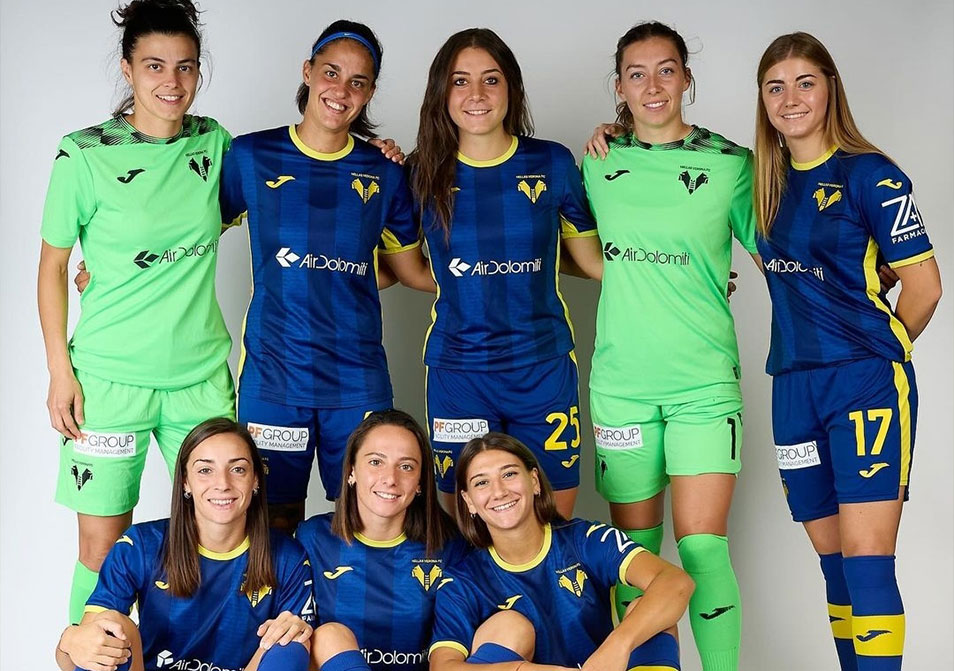
Miss Kiamou, can you tell us a little about yourself?
I'm Christianna Kiamou, I'm 29 years old and I'm half Greek and half British. I play for the Hellas Verona Women's Football Team in the Serie A League in Italy.
When and how did you start playing football, and who did you get the most support from in this regard?
For as long as I can remember, I had a ball at my feet. I remember being in my father's factory and playing with the ball. My family was very fond of football. My grandfather was the general manager of Athinaikos, my other grandfather from England was a football player for Aston Villa. My brother started playing when he was five and I forced my parents to play, so I started academies with the boys and at the age of 10 I went to a women's football team, Kallithea, for the first time.
Can you tell us about your development processes in football, what difficulties you overcame and how you got here?
My family and friends were all very supportive of me, no one was against me while I was playing. My father sacrificed a lot of his time, especially in training, so that I could play as I always did, and he never complained about it. He was always very happy as he took me everywhere without losing any effort to improve my football.
What did you do about women's football in Greece in the early years?
Now that I have seen how football works, I can say that the biggest challenge was being in the women's team from the age of 10. In Greece we didn't have academies for girls, so from a young age I had to go with adults and grow up fast not only in the game but also in life, and of course this had its advantages and disadvantages. Then, like every football player, I got injured, had 5-6 surgeries and had a hard time because we did not have the support of the clubs and the information we have now. My family supported me very much in this regard. I was very lucky that my family was acquainted with the best sports doctors in the world, as well as in football. Lastly, I left my country at a young age and didn't really know what it would be like when no one else did it. And I had a really hard time in my struggle at that time, but I can say that it was definitely worth it.
Which countries and teams have you played for so far?
I played for some clubs in Greece like Kallithea, Glifada, Karditsa and others. Then I moved to Hungary Dvtk. Then I came to Pomigliano, San Marino, Cittadella, Cesena and now Hellas Verona, an Italian Team.
What position do you play and what are your characteristics?
I play as a midfielder. I'm always really calm on the field and I love the responsibilities. I'm not fast, so I worked hard to read the game and get the right position. I can say that my mental qualities and tactical knowledge are definitely my strong points.
Can you tell us in detail about your experiences and experience in the teams you have played for so far?
I worked hard on my mental qualities during these years I played. Football, like any other sport, is really tough mentally. I worked hard to have the right mentality on and off the field and it was something I improved a lot. When I started playing, I didn't have 100% ability to focus or deal with pressure, even if I didn't show people that I was stressed before matches. I was playing football but I wasn't fit enough and didn't know how to train properly. Then I found some people and showed them how athletes train physically and mentally, and since then I've been doing double workouts every day, checking my food with my nutritionist, taking care of my body, sleeping as much as needed so I can push my body harder every day in training.
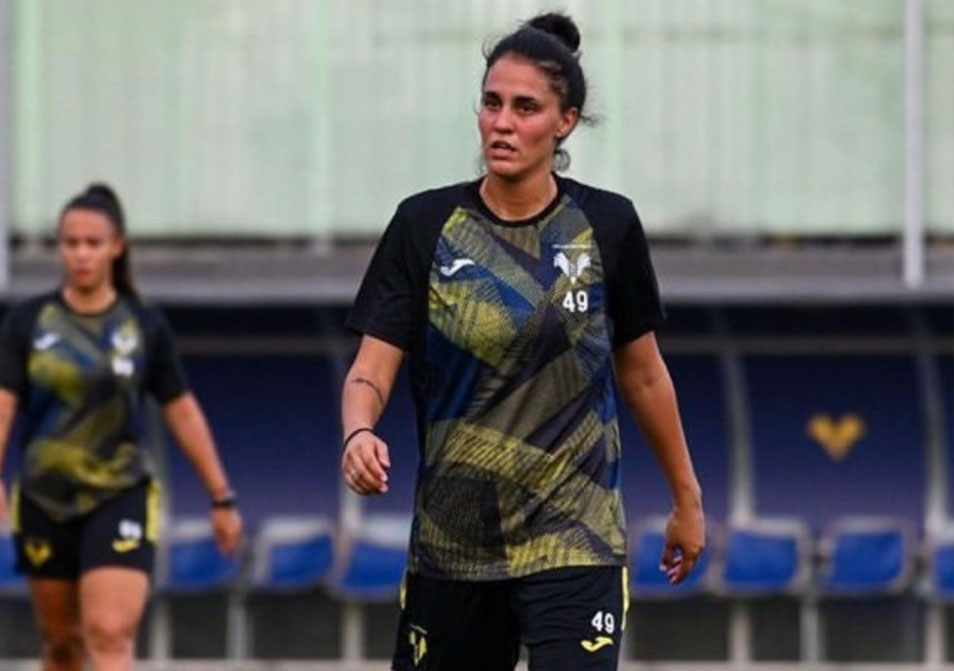
How do you stay motivated while preparing for matches?
My motivations are always watching myself getting better and better, knowing things, having new experiences that I would never have had if I hadn't worked so hard. Injuries played a big role in all of them, when I got some injuries I learned better how to manage my body, how to function well and mentally. It was really hard but it made me so much stronger. The experience at Pomigliano helped me too, we won Serie B while I was there and the coach gave me a lot of responsibilities when it came to important matches to win the league. He gave me this responsibility but reassured me and talked me through all the details I needed to pay attention to. It was really hard when we lost because the club always expected us to win and put a lot of pressure on us, which was a shock in the first games but after we loved it. Now I love responsibilities, I love big important games and I'm never stressed, I'm excited to play these games, I can focus on the full game and take that pressure off. I have my routine before matches, it doesn't matter the opponent or if I start, I always do the routine which keeps me motivated, ready and focused for the game.
Can you give us an example of how you got out of a difficult position during the match?
A lot of things happen in a football match and of course you may have some difficult situations. As I said before, it is a mentally difficult game and that is why I worked hard in this part. When I make a mistake or have a difficult opponent and difficult moments in a match, I just talk positively to myself and try to play as easy as possible to build my own confidence. One of the best examples is the final with Dvtk against Ferencvaros. We went down 2-0 in the first 25 minutes and to be honest they were the better team. I remember our team-mates asking our coach to change the pressing so we could attack them and it was 2-2 at half-time. We still lost, but it was a match where we never gave up and played until the last second, even if they were better and we had difficulties. There are a lot of emotions in football and you need to deal with them in the best way possible and never give up in a match. My goal is always to improve as much as I can, both as an athlete and as a person, and to continue competing at a high level, always with professionalism and seriousness, for a long time!
What are your next goals?
My personal goal is to help promote the social acceptance of women's football, especially among sports fans in Greece.